
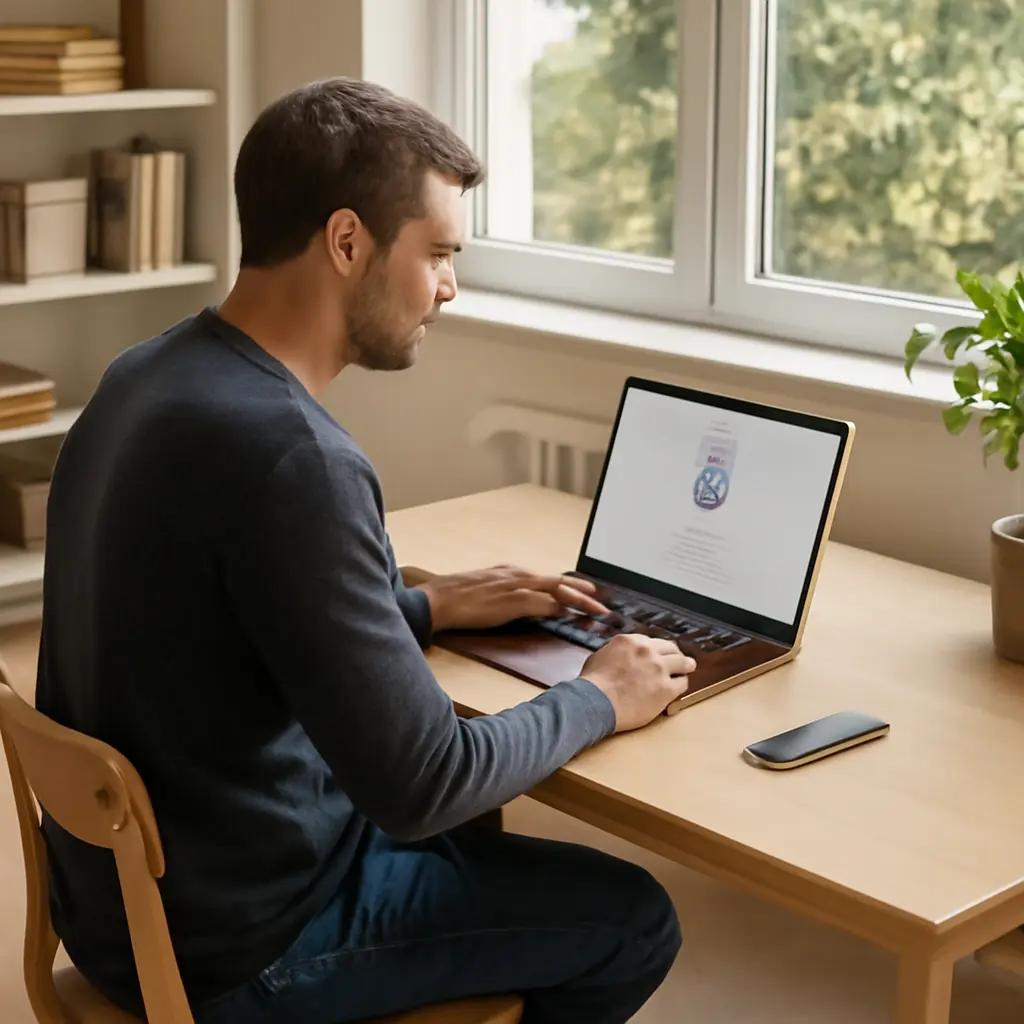
The brain is a biological prediction machine; a digital vault is a system that stores sensitive information behind authentication and encryption. The unsettling overlap is that vaults increasingly rely on brain-linked signals—such as fingerprints, faces, voices, and behavioral patterns—to recognize their owners, while neuroscience shows that those signals can be variable, observable, and sometimes imitated. The risk is not that a vault literally reads thoughts: it is that biometric systems can expose or misuse measurable bodily data. With identity theft affecting millions and billions of credentials circulating in breach datasets, understanding the limits of biometric security matters as much as choosing a strong password.
Digital-vault biometrics: what the pairing means
A digital vault is software or hardware designed to protect information such as passwords, financial records, private files, or cryptographic keys. Biometrics are measurements of physical or behavioral traits used to recognize or verify a person. The National Institute of Standards and Technology (NIST) treats biometric comparison as probabilistic: a system estimates whether a new sample matches an enrolled reference, rather than proving identity with absolute certainty.
That distinction is crucial. A password can be changed after exposure; a face, voice, or fingerprint generally cannot. Biometric systems also have error rates and can be affected by lighting, injury, aging, device quality, and deliberate presentation attacks. The hyponyms—the specific forms of this broader pairing—include fingerprint, face, iris, voice, and behavioral biometrics.
Fingerprint and face recognition
Fingerprint recognition compares ridge patterns, while face recognition analyzes facial features or image-derived templates. These methods are convenient for unlocking phones and password managers, but convenience does not make the biometric itself a secret. A fingerprint may be left on objects, and a face can be photographed at a distance. NIST’s face-recognition evaluations have documented that performance varies across algorithms and conditions, reinforcing the need to assess a system rather than assume all face matching is equally accurate.
Voice and behavioral biometrics
Voice biometrics assess characteristics of speech, while behavioral systems may analyze typing rhythm, device handling, or patterns of interaction. These traits can support continuous or adaptive authentication, but they are not fixed identifiers: illness, stress, background noise, microphones, and routine changes can alter signals. Generative audio tools also make voice imitation easier, so a voice match alone should not be treated as a reliable high-security proof of identity.
Neuroscience explains why biometric signals are imperfect
Neuroscience studies how the nervous system produces perception, memory, movement, and behavior. For digital security, its practical lesson is that people are not perfectly consistent sensors or performers. A person’s voice, keystrokes, facial expression, and ability to respond to a challenge can shift with attention, fatigue, emotion, injury, or context. Authentication systems that treat these signals as immutable can mistake ordinary human variation for fraud—or accept a convincing imitation.
Memory, attention, and authentication fatigue
Authentication often asks people to remember secrets, interpret prompts, and make decisions under time pressure. Cognitive load and repeated interruptions can encourage shortcuts, such as approving an unexpected sign-in request. The U.S. Federal Bureau of Investigation has warned about “MFA fatigue” attacks, in which criminals bombard a target with authentication prompts until the person approves one. Multifactor authentication is valuable, but users should reject unrequested prompts and report them rather than assuming every notification is legitimate.
Neural data is not the same as a mind-reading password
Brain-computer interfaces measure or interpret aspects of neural activity to support research or assistive technologies. They are distinct from ordinary fingerprint or face unlock, and consumer authentication does not generally provide access to a person’s thoughts. Still, neural signals and related health data can be sensitive. A 2023 report by the Organisation for Economic Co-operation and Development (OECD) emphasized the need for responsible governance of neurotechnology, including privacy and informed consent. The relevant concern is data protection and possible inference—not a vault secretly extracting memories.
Vault threats: breach, spoofing, and recovery failure
A secure vault depends on more than its biometric lock. Threats include stolen credentials, malicious software, deceptive recovery workflows, compromised devices, and attacks against the service provider. IBM’s 2024 Cost of a Data Breach Report estimated the global average cost of a data breach at US$4.88 million, a record in its survey. The Identity Theft Resource Center reported 3,205 U.S. data compromises in 2023, illustrating how frequently organizations face exposure incidents.
Template exposure and biometric spoofing
Many systems do not store a raw face or fingerprint image for routine matching; they store a mathematical template. Templates reduce some risks, but they remain sensitive data, and security depends on how they are generated, protected, compared, and deleted. Presentation attacks—such as presenting a photo, mask, recording, or artificial fingerprint—attempt to fool a sensor. NIST guidance recommends evaluating presentation-attack detection and the full authentication process, not relying on a biometric label as proof of robust security.
The recovery path can become the weakest link
Account recovery is the procedure for regaining access after losing a device, password, or authentication factor. If recovery relies on easily guessed personal questions, an email account with weak protection, or a support agent who can be socially engineered, the biometric lock may offer little practical protection. In 2023, the U.S. Federal Trade Commission received more than 1 million reports of identity theft, according to its Consumer Sentinel Network Data Book. A vault’s recovery options should therefore receive the same scrutiny as its primary login.
Building a safer digital vault
The strongest approach combines independent safeguards. Biometrics can make access convenient, but they should operate alongside a strong device passcode, phishing-resistant authentication where available, encryption, and careful account recovery. The Cybersecurity and Infrastructure Security Agency (CISA) recommends multifactor authentication, with phishing-resistant methods such as passkeys or hardware security keys offering stronger protection against common credential theft than passwords alone.
- Use a reputable password manager and create a unique, randomly generated master password.
- Enable multifactor authentication; prefer passkeys or security keys for important accounts when supported.
- Keep devices and vault software updated, and enable full-device encryption and automatic locking.
- Do not approve unexpected authentication prompts, and never share one-time codes with callers or message senders.
- Review recovery email addresses, trusted devices, and emergency-access settings periodically.
- Check whether biometric templates are stored locally or sent to a provider, and review the provider’s privacy and deletion practices.
For example, a person using face unlock for a password manager can reduce risk by requiring the device passcode after a restart, protecting the account with a passkey or security key, and securing the recovery email with its own strong authentication. If the face sensor fails or the user is injured, a deliberate fallback is available without turning recovery into an easily exploited shortcut.
Conclusion: protect the vault, not just the biometric
Digital-vault biometrics offer speed and accessibility, but neuroscience and security research both caution against treating human signals as perfect, permanent secrets. Fingerprints, faces, voices, and behaviors can vary or be copied; neural data raises distinct privacy questions; and breaches, prompt fatigue, and recovery weaknesses can defeat an otherwise impressive lock. Use biometrics as one layer, strengthen the surrounding authentication and recovery system, and read the privacy and security documentation for any vault that holds sensitive information.
Sources: National Institute of Standards and Technology, Digital Identity Guidelines: Authentication and Lifecycle Management, https://pages.nist.gov/800-63-3/sp800-63b.html; National Institute of Standards and Technology, Face Recognition Technology Evaluation, https://www.nist.gov/programs-projects/face-recognition-technology-evaluation-frte; Federal Bureau of Investigation, Multi-Factor Authentication Fatigue, https://www.fbi.gov/contact-us/field-offices/portland/news/multi-factor-authentication-fatigue; Organisation for Economic Co-operation and Development, Recommendation of the Council on Responsible Innovation in Neurotechnology, https://legalinstruments.oecd.org/en/instruments/OECD-LEGAL-0457; IBM, Cost of a Data Breach Report 2024, https://www.ibm.com/reports/data-breach; Identity Theft Resource Center, 2023 Annual Data Breach Report, https://www.idtheftcenter.org/publication/2023-annual-data-breach-report/; Federal Trade Commission, Consumer Sentinel Network Data Book 2023, https://www.ftc.gov/reports/consumer-sentinel-network-data-book-2023; Cybersecurity and Infrastructure Security Agency, Implementing Phishing-Resistant MFA, https://www.cisa.gov/resources-tools/resources/implementing-phishing-resistant-mfa.